AutoRejection
Industrial low-fill can rejection with hardware, software, and brewery-line constraints.
AutoRejection combined load-cell measurement, custom PCB work, Raspberry Pi control, Node-RED automation, AWS IoT, and a Wi-Fi dashboard to reject underfilled cans at production-line speed.
What it solves
Breweries need to detect and reject low-fill cans without slowing the canning line or forcing operators to watch every pass by hand.
AutoRejection measures can weight in motion, tracked historical data, exposed calibration and production views over Wi-Fi while triggering pneumatic rejection hardware when cans fell outside the accepted range.
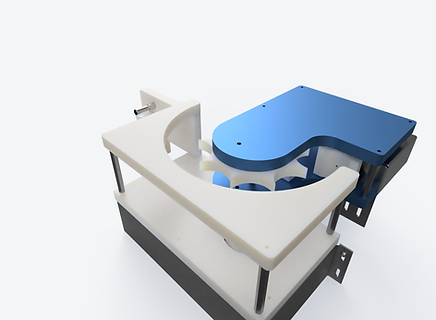 Front cabinet and product path
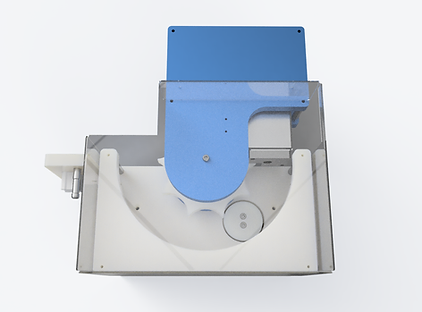 Top view of conveyor and reject area
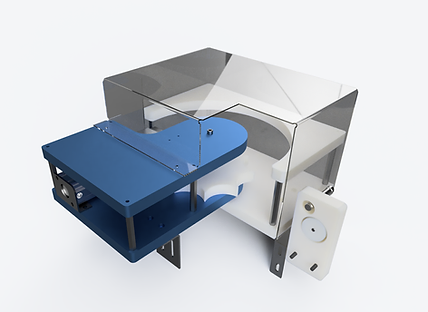 Back view of service access
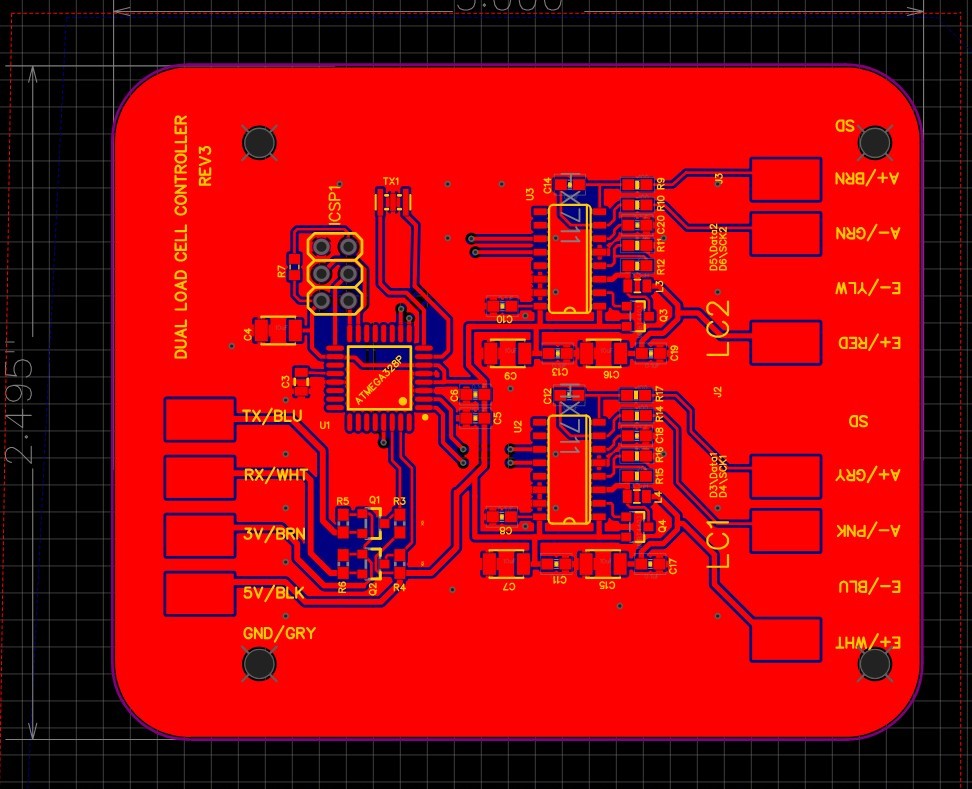 Custom load-cell PCB
Who this is for
- Breweries running automated canning lines
- Equipment partners integrating with existing machinery
- Operators who need calibration, monitoring, and exports
- Engineers building real-world hardware/software products
What it does
AutoRejection was a side project that became a business concept under MAP Equipment. I worked on it for most of a year with a business partner, Wild Goose Filling, and local breweries in the Bozeman area.
The machine weighed cans as they crossed the scale, rejected underfilled cans with pneumatic hardware, showed live and historical weights in a custom dashboard, exported CSV data, and used AWS IoT for updates and remote data storage. It ran on a Raspberry Pi with encrypted storage, a ZYMKEY real-time clock, separate 5V and 24V supplies, and a UL-listed stainless cabinet.
Workflow covered
- Measure and classify - read load-cell values in motion, stabilize the signal, and compare each can against calibrated thresholds.
- Reject and monitor - trigger the pneumatic reject mechanism, show live weights, and give operators a clear dashboard for current line state.
- Calibrate and report - tune the scale, review historical graphs, export CSV data, and support OTA updates through the connected system.
Technical highlights / stack
Why it matters
This project forced software decisions to survive physical timing, wet environments, manufacturability, partner schedules, support needs, and operator workflows. Code was only one part of the product.
Challenges
- Reliable weight measurement and rejection at 50+ cans per minute.
- Designing for moisture, temperature changes, vibration, and brewery use.
- Coordinating machine variants with Wild Goose Filling and brewery staff.
- Balancing AWS connectivity, encryption, cost, manufacturability, and support.
- Developing custom load-cell hardware with local engineering and PCB partners.
Current scope
Built
- Standalone machine variant
- Wild Goose line variant
- Dashboard and calibration flow
- CSV data export
Hardware
- Load-cell PCB
- Raspberry Pi control
- Pneumatic rejector
- 5V / 24V cabinet power
Business result
- 10 total units sold
- 5 purchased by Wild Goose
- Most work remained prototype-heavy
- Strong lessons for future hardware products
Related work
What to do next
Open the dashboard demo or watch the prototype clip if you want to see the operator workflow and physical rejection path behind the write-up.